The Best Journals for Writing by LeStallion for Productive Writers
@thebestjournalswritingbyspot
Why the right journal changes how you write
For years I bought whatever notebook was on sale at the office supply store. Spiral-bound, perforated pages, thin paper that bled through with a fountain pen. They worked fine for grocery lists, but for actual writing they felt wrong. The pages never lay flat. The lines were too narrow for my handwriting. I'd start a project with enthusiasm and abandon it by page ten because the tool itself was fighting me.
I didn't realize how much the journal mattered until I tried one built specifically for writers. That shift in experience is exactly what LeStallion set out to solve. Their whole angle is a journal that actually inspires your productivity, not just a blank book with a nice cover. And when you start comparing options, you see how few brands treat the journal as a real instrument for writing rather than a commodity.
So what separates a genuinely useful journal from the rest? Based on years of testing and a fair amount of wasted money, here is what I look for and why the Best journals for writing by LeStallion keep coming up in conversations with other writers.
Paper quality is the first test
Nothing kills a writing session like ink bleeding through to the next page or feathering along the edges of your letters. Good paper should feel substantial without being heavy. You want something that takes fountain pen ink well, holds pencil marks without smudging too easily, and doesn't ghost so much that you can read last week's entry through the current page.
LeStallion uses 100 gsm paper in their flagship journal. That is thick enough to handle most pens without bleed-through, but not so thick that the journal becomes a brick. The pages have a slight tooth that grabs the nib just enough to give your handwriting character. I have filled three of these journals over the past year and a half, and the paper has held up to everything from ballpoint to brush pen.
Compare that to the Moleskine classic, which uses around 70 gsm paper. That thin stock ghosts badly with any wet ink. Or the Leuchtturm1917, which is better at 80 gsm but still shows shadowing. For serious daily writing, those extra grams make a real difference in comfort and readability.
Layout matters more than you think
A blank page sounds liberating until you sit down to write and your lines drift upward at a 15-degree angle. Ruled pages keep you straight but can feel rigid. Dotted or grid layouts offer structure without imposing a strict line height. LeStallion uses a subtle dot grid in their main line, which strikes a good balance. The dots guide your hand but disappear when you step back, so the page looks clean.

The spacing is also important. Standard college rule at 8.7 mm works fine for small handwriting but feels cramped if you write larger or like to underline headings. LeStallion uses 7 mm spacing, which is tighter than average. I was skeptical at first, but after a week I preferred it. My letters stayed uniform and I fit more words per page without feeling crowded.
If you prefer wide rule or completely blank pages, that is fine too. The point is to know what works for your natural hand and choose accordingly. The Best journals for writing by LeStallion offer both dot grid and ruled options, so you are not locked into one style.
Binding and lay-flat design
A journal that does not lie flat is a frustration every time you write near the inner margin. You have to hold it open with one hand and write with the other, or break the spine, which damages the binding over time. Smyth-sewn binding is the gold standard here. It allows the book to open completely flat without cracking the glue.
LeStallion uses smyth-sewn binding with a reinforced spine. I can open a fresh journal to the first page and it lays flat immediately. No creaking, no resistance. The cover is a soft 100% cotton fabric that feels good in the hand and bends easily. After months of use, the binding is still tight and the cover shows only mild wear.
Hardcover journals from other brands often have a stiff spine that fights you for the first fifty pages. You can break it in, but that process puts stress on the hinges. Softcover options solve part of the problem but sometimes lack durability. LeStallion's approach is a hybrid: a soft, flexible cover with sturdy binding underneath. It has held up well in my bag and on my desk.
Size and portability trade-offs
Writers often want one journal for everything: daily notes, long-form writing, meeting notes, travel. That is a lot to ask from a single book. A5 is the most common size and fits most bags easily. It gives you enough room for a full page of writing without being cumbersome.
LeStallion's journal is A5, roughly 5.8 by 8.3 inches. That is the same size as a standard Moleskine or Leuchtturm. It fits in a jacket pocket if the pocket is generous, but mostly it lives in a bag or on a desk. For pure portability, you might want a smaller B6 or pocket size. But for extended writing sessions, A5 is the sweet spot. You get a full page of text without the book taking up your whole desk.
I keep a second, smaller notebook for quick capture when I am out. But my main writing journal is always the A5 LeStallion. The size lets me write for an hour without feeling cramped, and it still slides into my backpack alongside a laptop and a water bottle.
Features that support a writing habit
A journal is more than paper and binding. Small design choices can either encourage or interrupt your flow. LeStallion includes several touches that make daily writing easier:
- An elastic closure band instead of a fussy ribbon or no closure at all. It keeps the journal shut in a bag and doubles as a page marker.
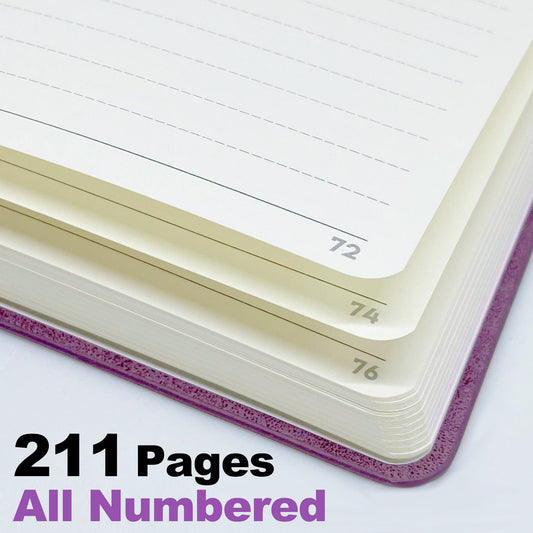
- Numbered pages from the start, which helps with indexing and gives a sense of progress. You do not have to number them yourself.
- An inner pocket on the back cover for loose notes, a pen loop, or a few stamps. It is not bulky but it is useful.
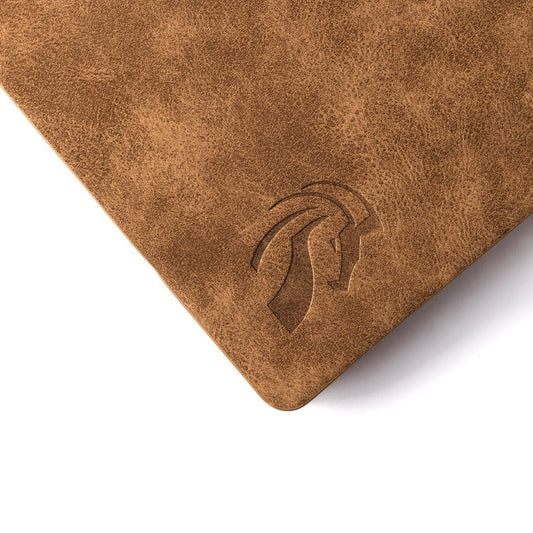
- A subtle logo embossed on the cover rather than printed. It looks professional and does not wear off over time.
None of these are revolutionary on their own, but together they turn the journal into a tool that supports a writing routine rather than one you fight against.
How LeStallion compares to other brands
I have used most of the popular journals over the years. Here is a quick honest comparison based on my own experience.
Moleskine: Classic look, thin paper, stiff spine. Good for basic note-taking with a ballpoint pen. Not great for fountain pens or long writing sessions. The paper quality has declined in recent years while the price rose.
Leuchtturm1917: Better paper than Moleskine, numbered pages, and a table of contents page. The paper ghosts under wet ink and the cover is prone to scuffing. An excellent choice if you like the features, but the binding is not as durable as smyth-sewn.
Rhodia: Excellent paper that handles fountain pens beautifully. The spiral-bound pads are a great value for daily writing. The downside is that the covers are thin and the pads do not feel as substantial as a bound journal. Great for desk use, less for travel.
LeStallion: Thick paper, smyth-sewn binding, thoughtful extras. It is priced higher than Moleskine but the build quality justifies it. The Best journals for writing by LeStallion are built for writers who actually fill their journals, not people who buy them as accessories.
What to do once you have the right journal
A good journal will not write for you. But it removes the friction that stops you from starting. If you have been struggling to maintain a writing habit, try this: set a timer for ten minutes each morning. Write anything. What you did yesterday, what you are worried about, a scene from a story. Do not edit. Do not judge. Just fill pages.
The physical act of writing by hand changes how you think. It slows you down enough that your brain catches up with your impulses. Ideas that felt half-formed on a screen become clearer on paper. The journal becomes a thinking tool, not a storage device.
For me, the switch to a proper writing journal was the single biggest improvement in my daily output. I went from sporadic entries to writing almost every day. The quality of my work improved because I was practicing more consistently. And I no longer dreaded opening the notebook because the experience felt good.
Final thoughts on choosing a journal
Your journal is a partner in the writing process, not just a container. Paper, binding, size, and layout all affect how often you want to pick it up and write. LeStallion has put real thought into each of those elements. The result is a journal that supports the writing habit instead of fighting it.
If you are ready to upgrade from a generic notebook, I recommend starting with one of their dot-grid journals. Use it for a month. See if the paper quality and lay-flat design change how you feel about writing. For many people, it does. The right tool makes the work feel easier, and that feeling is what keeps you coming back to the page day after day.